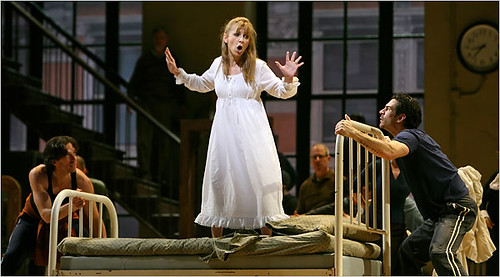
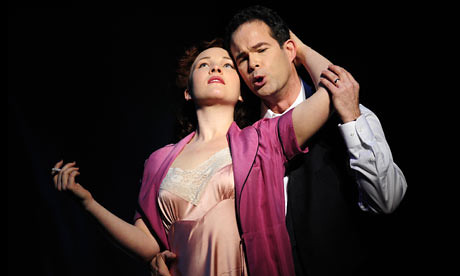
A cálida Netrebko – que não cessa de abalar o meu casamento... -, nesta entrevista, revela sobriedade e bom senso. Nem tudo o que diz merece mais do que uma leve e rápida leitura – e por que haveria a Senhora de nos inundar com saídas metafísicas???

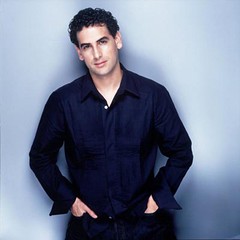
Contudo, apreciei o respeito que nutre por Juan Diego Flórez, uno de los más grandes, por supuesto!
«"Me gustaría cantar más con Dieguito (Juan Diego Flórez). Es adorable. Pero nuestras voces no se compenetran bien. No sé muy bien por qué. Una pena porque es el mejor cantante rossiniano, no de ahora, sino de la historia"»
Outra das suas tiradas foi a vénia eboçada diante da figura de Mortier, o polémico:
«Volverá a Madrid. "En tres años, con Anna Bolena. Me lo ha propuesto Gérard Mortier. Me llevo muy bien con él, aunque parezca raro", comenta. Bien es sabido que Mortier no suele pasar una a los divos caprichosos. "Lo que no es mi caso, por cierto. Creo que le gusto", aclara ella. "Hace las cosas bien. Es el hombre indicado para dirigir un teatro".»
Bom, bom... Em boa verdade, que se lixe o Senhor – com o devido respeito. Verdadeiramente, o que interessa é a sua futura interpretação de Anna Bolena! By the time, serei Henrique VIII e – asseguro-vos – a história reescrever-se-á! Duvidam?!
A entrevista termina, com uma singeleza e transparência desconcertantes:
«"Yo he fabricado mi imagen. Muchos dicen que no me parezco a la que ven por ahí. Yo contesto: '¿Y qué? ¿Acaso Madonna se parece a esa que sale en las fotos?". Lo que no soporta es la vulgaridad. "A esas cantantes que parece que acaban de salir de la cocina de cortar chuletas. Hay que cuidarse un poco, hombre. Arreglarse para salir al escenario. La gente que viene a vernos quiere algo especial".»
O problema é haver quem cuide da imagem, não saindo nunca do anonimato, pela vulgaridade ou fealdade.
Bela, cálida, sensual – nem tudo é cosmética, pois já a vi live -, prolixa em dotes vocais e intepretativos... Que mais deseja um narcisismo são?! Respondam com franqueza!