Fleming, Stemme, Dessay, Bartoli e Westroek.
Claro está, eu acrescentaria Mattila, Matos (Elisabete), Didonato, Voigt e Netrebko!!!
«Renée Fleming
Versatile and technically assured American soprano with a huge international reputation, who reigns as undisputed queen of New York’s Metropolitan Opera. Along with her sterling professionalism and acting skills, she has a gorgeously even and creamy voice that excels in late romantic music, but she can also sing show tunes and (as her latest album Dark Hope demonstrates) soft rock. Some critics find her interpretations bland and her style smoochy, but it’s hard to think of anyone who delivers the goods so consistently, looks great in Valentino and Versace on the concert platform and has had a dessert and a scent named after her. A regular at Covent Garden, she will sing at this year’s Last Night of the Proms.
Nina Stemme
This attractive and highly intelligent Swedish soprano carries the torch for the long Scandinavian tradition of Wagner singing and her interpretation of the role of Isolde is universally considered to rank among the very greatest in history. Pacing her career carefully and balancing its demands with bringing up a family in Stockholm, she will be undertaking the even more demanding role of Brünnhilde in The Ring cycle for the first time in San Francisco this autumn. Also ranks as an accomplished and stylish singer of Verdi’s more dramatic operas. She will be singing Leonore in Beethoven’s Fidelio at Covent Garden in 2011.
Natalie Dessay
An enchantingly quirky and individual French soprano with a tiny physical frame, light, small voice and outsize personality. Recently sang the comic role of Marie in La Fille du Régiment at Covent Garden to wild acclaim, and is also celebrated for her portrayal of tragic operatic heroines such as Lucia in Lucia di Lammermoor and Ophélie in Thomas’s Hamlet.
Despite an injury to her vocal cords, her flexibility and prowess above the stave remains impressive. Next season in Paris she undertakes Cleopatra in Giulio Cesare, a debut which should show off her talents to perfection. London hears her next as Mélisande in Pelléas et Mélisande at the Barbican in April .
Cecilia Bartoli
A phenomenal singer with an idiosyncratic technique, born in Rome to opera-singer parents. Started her career as a mezzo-soprano but has now pushed into high soprano territory, with often controversial results. Focuses her repertory largely on Italian music of the pre-Verdi era, and makes few operatic appearances outside Zurich, where she lives.
Hugely successful on record (she has been exclusively contracted to Decca for two decades) and in concert, she is rumoured to be the most highly paid classical artist in the world today. Love her or hate her – and some find her mannerisms infuriating – there’s no denying her star quality or musical integrity. Her fans keenly await her first attempt at the supremely testing title role in Bellini’s Norma in Germany this summer.
Eva-Maria Westbroek
One of today’s most impressive examples of a true singing actress, whose performances are as remarkable for dramatic subtlety as for vocal prowess. Born in the Netherlands, she began her career as a singing waitress in an Amsterdam restaurant but soon won herself a huge reputation singing a largely German repertory in European opera houses.
A favourite at Covent Garden since her stunningly powerful performances as Sieglinde in Die Walküre and Katerina in Shostakovich’s Lady Macbeth of Mtsensk, she returns here in the 2010-2011 season to sing two major roles – the saintly Elisabeth in Tannhaüser and the less than saintly Anna Nicole Smith in the premiere of Mark-Anthony Turnage’s new opera Anna Nicole.»
Mostrar mensagens com a etiqueta Didonato. Mostrar todas as mensagens
Mostrar mensagens com a etiqueta Didonato. Mostrar todas as mensagens
quinta-feira, 1 de julho de 2010


sábado, 23 de janeiro de 2010
domingo, 17 de janeiro de 2010
La Cenerentola do Liceu

Antecipando a edição de La Cenerentola (2008) captada ao vivo no Liceu, eis um fragmento arrebatador (aqui).
Depois de um momento histórico, apoteótico, desta envergadura e calibre, a Senhora deveria ver erguida uma estátua em sua memória. Deveria ser agraciada com uma tiara, um trono eterno...
Com a felicidade estampada no rosto, Didonato conquista-nos, neste que é – seguramente – um momento de antologia belcantista.
Uma agilidade impressionante, uma graciosidade desconcertante.
Que mais quer uma Cenerentola perfeita?
terça-feira, 1 de dezembro de 2009
Isabel Colbran - II, ossia Joyce Colbran, for sure!
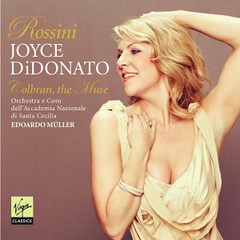
(Virgin 50999 6945790 6)
Isabella Colbran (1785-1845) foi uma ilustre cantora lírica de inícios do século XIX. À época, a fogosa espanhola era A prima Donna do San Carlo, em Nápoles. Rossini não resistiu aos múltiplos encantos, artísticos e carnais, da espanhola, célebre pelas três oitavas de extensão vocal e magistral talento dramático.
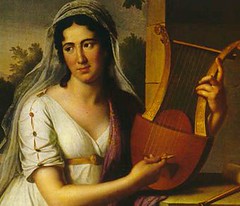
Rossini escreveu algumas das mais célebres óperas sérias para, justamente, La Colbran - Elisabetta, regina d’Inghilterra (1815), Otello ( 1816 ), Armida (1817), Mosè in Egitto, Ricciardo e Zoraide (1818), Ermione, La donna del lago (1819), Maometto II (1820), Zelmira (1822) e Semiramide (1823).
O presente registo constitui uma homenagem à grande Isabella Colbran. Refira-se que, em inícios dos anos 1990, a também imensa Cecilia Bartoli decidiu homenagear a diva espanhola - como aqui referi. À época, o registo de Bartoli fez história, constituindo a mais extraordinária colectânea de árias rossinianas sérias de que há memória.
Perto de vinte anos volvidos sobre o superlativo Rossini Heroines, eis o contributo de Joyce Didonato para a revitalização do repertório rossiniano sério.
Didonato é o maior mezzo ligeiro vivo, em plena ascendência. O seu trabalho consagrado a Handel é triunfal, pela disciplina, bravura e graciosidade. Joyce Didonato é, de igual modo, a mais destacada rossiniana da actualidade, particularmente requisitada pela cena lírica internacional. As suas Rosina e Angelina são absolutamente modelares. Deus a conserve, fresca e hábil, por muitos e bons anos, para que (entre outras) revisite a A Italiana e Fiorilla, de O Turco em Itália!
A grande intérprete americana brinda-nos, por via deste registo, com uma bravura heróica e despudorada, assente numa técnica infalível, sem mácula alguma. Respira com uma mestria impressionante e afronta o desafio sem temor nem subterfúgio. O timbre é amplamente colorido e a agilidade pirotécnica.
Como pérolas sumas deste trabalho destaco Armida (de sonho) – dilacerada e inflamada -, a majestosa Elisabetta e, sobretudo, a Elena rejubilante, porventura a mais incandescente que alguma vez conheci.
Para a história, indubitavelmente.
__________
* * * * * *
(6/5)
Subscrever:
Mensagens (Atom)