
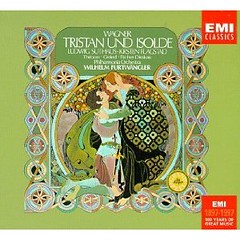
Embora Thebom fosse um mezzo verdiano de assinalável qualidade, foi em Wagner que mais se destacou, particularmente no Met, nos idos anos 1940 - 1960.
RIP
«Blanche Thebom, a mezzo-soprano who was discovered singing in a shipboard lounge as a teenager and went on to sing more than 350 performances with the Metropolitan Opera, died on Tuesday at her home in San Francisco. She was 94.
Her death was confirmed by Roger Greenberg, a longtime friend.
In a field long dominated by Europeans, Ms. Thebom (pronounced THEE-bom, with the th as in thin) was part of the first, midcentury wave of American opera singers to attain international careers. Associated with the Met from the mid-1940s to the mid-1960s, she was praised by critics for her warm voice, attentive phrasing and sensitive acting.
Reviewing her “Walküre,” a critic for The New York Times wrote that Ms. Thebom “scored an immediate success.”
At the Met, her other roles included Ortrud in Wagner’s “Lohengrin,” Azucena in Verdi’s “Trovatore” and Amneris in his “Aida,” and the title role in Bizet’s “Carmen.” She also sang at Covent Garden and the Glyndebourne festival in England.
Ms. Thebom last performed at the Met in 1967. She later directed the opera program at the University of Arkansas, Little Rock, and afterward moved to San Francisco, where she taught privately and helped create a training program for young singers.
In later years, Ms. Thebom appeared often in duo recitals with the soprano Eleanor Steber.
While still a teenager, Ms. Thebom traveled to Sweden with her parents in the 1930s. On the crossing, she was heard singing in the ship’s lounge by Kosti Vehanen, a pianist who often accompanied the contralto Marian Anderson. Mr. Vehanen arranged for Blanche to study in New York, where her primary teacher was Edyth Walker, a former Metropolitan Opera mezzo.
Ms. Thebom’s marriage, to Richard Metz, ended in divorce. No immediate family members survive.
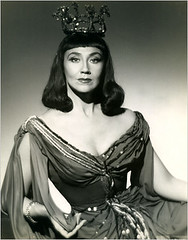
Her recordings include Mozart’s “Così Fan Tutte,” in which she sings Dorabella, on the Sony Classical label, and albums of songs by Hugo Wolf and Robert Schumann for RCA Victor. She appeared in films, among them “Irish Eyes Are Smiling” (1944) and “The Great Caruso” (1951).
Ms. Thebom’s career seemed ordained from the moment she stepped onto the New York stage. Making her recital debut at Town Hall in January 1944, she sang a program of Massenet, Handel, Mussorgsky and Brahms.
Reviewing the concert, The Times called her a “richly gifted young artist,” adding, “Her work revealed a wealth of temperament and an inherent musicianship that presage a brilliant career.”»

