Thaïs, de Massenet, é uma ópera pouco relevante, roçando a mediania. Pouco original, explora banalidades e facilidades melódicas até à exaustão.
Como – sabiamente - alguém disse, Thaïs apenas se reveste de interesse, caso a protagonista revele excelsas qualidades líricas (sobretudo) e dramáticas.
A personagem principal é uma escrava de Eros, prestando vassalagem a Vénus. Thaïs é, psicanaliticamente, uma histérica, que tudo sacrifica em nome do prazer e desejo. Deseja e faz-se desejar, enlouquecendo (-me)...
A conversão apenas transforma o objecto da sua devoção: da carne, transita para o espírito (santo), investindo um e outro com o mesmo fervor fanático, quase orgástico.
A presente interpretação é absolutamente antológica, graças à superlativa qualidade lírica e cénica de Fleming e Hampson: ambos são monstruosos, no mais nobre dos sentidos.
Não fora a divina prestação de ambos e Thaïs não passaria, como disse, de uma vulgar peça lírica, com aspirações a obra de reportório.
A encenação transpira uma megalomania assumidamente kitsch, com dourados e veludos a rodos. Os cenários são imensos, ricamente coloridos e ornamentados, quase ofuscando os incautos. Ainda assim, há uma espontaneidade infantil no trabalho de Cox, que torna esta mise-en-scène num objecto de relativo interesse.
Evidentemente, tudo gira em torno da fabulosa Fleming, vestida por Lacroix, também ele um sucedâneo do kitsch...
Fleming faz história, nesta indispensável Thaïs. Ou muito me engano, ou a impotência masculina desconhece esta fonte de excitação: diante do visionamento da lascívia de Renée, o famigerado Viagra é coisa pretérita!
Renée Fleming é, por norma, uma intérprete morna, sendo o teatro o seu calcanhar de Aquiles. A voz matizada, de ouro, cravejada de diamantes, é um sonho, sem grande paralelo: passa do lirismo supremo à volúpia, com uma graciosidade e elegância impressionantes. A idade não lhe retirou ponta de segurança. Os pianissimi são cristalinos e devidamente apoiados; os agudos atrevidíssimos e ousados...
Depois vem a cereja, que encima o bolo: a interpretação...
Fleming é a embaixadora de Massenet, como havíamos observado em Manon. Nem Dessay, nem a tórrida Netrebko habitam a desafortunada protagonista como a intérprete americana: a todo o instante, Renée Fleming surpreende-nos!
Nesta Thaïs, entra em cena pela porta da luxúria, terminando mística, sempre em êxtase, histericamente. A progressão dramática e maturidade interpretativas são colossais: a lascívia, a sensualidade (sem ponta de vulgaridade), os trejeitos que adornam a sedução irresistível, a viragem da conduta, a conversão, o recato insidioso...
Sigo a carreira desta criatura tocada pela mão divina há cerca de quinze anos, tendo assistido, in loco, a algumas das suas interpretações. Sem a mais pequena hesitação, considero Thaïs a mais extraordinária investida de Renée Fleming, remetendo Manon e Rusalka – papéis onde não tem rivais - para lugares secundários. O maior soprano lírico revitaliza um dos supremos papeis líricos.
Um defeito, um deslize, uma marca humana, clamará o avisado leitor! Uma, apenas: o francês, insuficientemente fluido e aberto...
Depois, para cúmulo, há Hampson...
Uma graça nunca vem só!
Thomas Hampson é um diseur de referência, educado na escola do lied: ama a palavra e recita-a religiosamente. O seu francês bordeja a perfeição.
Já cinquentão, Hampsosn revela certa fadiga, nomeadamente na endurance. Contudo, a referida qualidade da sua dicção, aliada à robustez dramática do seu Athanaël – de um ascetismo e austeridade tremendos -, fazem desta interpretação uma referência.
Quanto aos demais actores, balanceiam entre o bom – Schade e Partridge – e o óptimo – López-Cobos e orquestra.
Em boa verdade, há obras menores que, interpretadas por figuras divinas, ganham importância! Tal é o caso de Thaïs!!!
_______ * * * * * (6/5)
nota 1: as legendas deste artigo apresentam falhas e omissões que comprometem o acompanhamento da peça, hélas! nota 2: as frases a bold destinam-se aos psis, sobretudo
nota 3: o espectador que resistir ao encanto da protagonista com Athanaël, no acto II, não é humano!
Por escassos €20 (graças a dois vales de desconto de €5/cada, no âmbito da Festa da Música), do sítio do costume, trouxe dois artigos que há muito namorava: La Traviata, com Ciofi, e Manon, com Fleming (a cuja gravação assisti, live from ONP).
Valeu a pena esperar estes anos todos, pois, originalmente, cada um dos artigos rondava os €50!!!
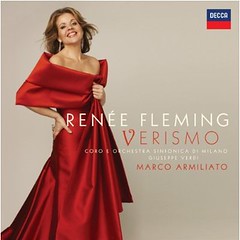
Renée Fleming retorna ao Verismo italiano, depois de um tour - que dura há cerca de 20 anos - por inúmeros outros territórios da lírica: barroco, classicismo, romantismo, bel canto, etc. Com maior ou menor sucesso, a intérprete americana pode gabar-se de ter visitado e experimentado um repertório amplo, mesmo que apenas discograficamente.
Fleming possui a mais bela voz de soprano lírico desde o ocaso de Te Kanawa e Studer. Que não haja dúvida. O timbre é de ouro, fino, magro e elegante, de uma graciosidade sem paralelo. A coloratura não lhe é totalmente estranha, razão pela qual triunfa nas ricas e ornamentadas passagens do bel canto (italiano, sobretudo). Mas não há bela sem senão: Fleming é uma actriz razoável, sendo uma intérprete banal, no tocante aos registos audio, note-se!
O presente registo obedece à lógica que a DECCA e Fleming traçaram, desde há tempos idos: alargar o repertório lírico, estendendo-o a todos os territórios, nunca repetindo interpretações (da própria).
A produção é cuidadosa, como sempre, exibindo uma cinquentona esbelta e elegante, muito retocada pelo dedo milagroso do PhotoShop.
Dado que Renée foi esgotando o mainstream da ópera, pouco lhe vai restando registar. Seria interessante que nos presenteasse com o Wagner lírico-dramático ou com o Verdi tardio (para além de Otello), mas enfim... Dos meus desejos falo eu!
A verdade é que, no presente artigo, o soprano americano nos brinda com um Verismo mal amanhado, por vezes de segunda água, apesar de alguns pilares puccinianos - La Bohème, Manon Lescaut e Turandot. Há premières e rarely recorded arias; há sim senhor... E não é por acaso que só agora se perpetuam discograficamente: sem ponta de graça e desinteressantes, o tempo encarregou-se de as apagar - Iris e Landoletta (Mascagni), a par de La Bohème (Leoncavallo), Gloria (Cilea), etc.
Em regra, Fleming pouco vai além da banalidade interpretativa. Refugia-se numa voz belíssima, sobreinvestindo os formalismos, onde permanece espantosamente fresca e segura.
Contudo, destaco três momentos de inegável beleza: Zazá, pela espessura e eloquência dramáticas, Conchita, que transpira segurança pirotécnica, e Fedora, cuja interpretação e arrojo dilaceram os mais incrédulos...
Pelos momentos citados e timbre de ouro, sobretudo.
Fleming e Bartoli são duas das mais extraordinárias cantoras líricas da actualidade.
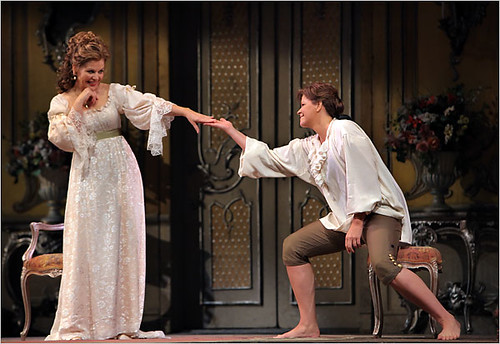
Salvo erro, actuaram juntas em As Bodas de Fígaro, no Met, em finais dos anos 1990. Terfel foi o Fígaro dessa produção. Segundo rezam as crónicas, o trio proporcionou um espectáculo mítico. Consta que o teatro ia indo a baixo, depois de Bartoli interpretar Deh vieni non tardar...
Fleming deve ser a melhor Condessa desde Te Kanawa e Terfel o Fígaro absoluto...
A notícia que abaixo cito destaca os últimos registos discográficos das duas divas.
«(...) Long evident in their discographies, these attributes shine again in their latest recordings, both for Decca. Ms. Fleming’s “Verismo” and Ms. Bartoli’s “Sacrificium” are like graduate seminars dressed up as recitals.
Ms. Fleming, 50, recalls the advice given her by Herbert Breslin, who masterminded Luciano Pavarotti’s career. “ ‘You won’t make it if you don’t sing bread-and-butter Italian opera,’ he told me,” Ms. Fleming said in a recent telephone interview. “I was constantly being pushed toward a European ideal of what it means to be a classical or opera singer, let’s say in the Renata Tebaldi mode. I reject that. I’m American. I’m eclectic. I’m going to follow my musical passions. And if people don’t like it, and it hurts my legacy, I’m not going to worry about that.”
The late 19th century and the first quarter of the 20th have proved particularly congenial to Ms. Fleming’s gifts. In 2006 she surveyed that period on “Homage: The Age of the Diva,” recorded in St. Petersburg, Russia, with Valery Gergiev leading the Orchestra of the Maryinsky Theater. Inspired by historic recordings of stars like Mary Garden, Maria Jeritza, Rosa Ponselle, Emmy Destinn and Lotte Lehmann, the program included a sprinkling of favorites among a spate of rediscoveries.
(...)
In “Verismo,” featuring the Orchestra Sinfonica di Milano Giuseppe Verdi conducted by Marco Armiliato, she concentrates on the “young school” of Italians who followed in the wake of Verdi. Balancing 7 tracks by the grand master Puccini (including a few obvious choices) are 10 thoroughly unfamiliar selections from composers remembered as one-trick ponies. Pietro Mascagni is represented not by “Cavalleria Rusticana” but by “Iris” and “Lodeletta”; Alfredo Catalani, by an aria from “La Wally” but not the familiar one. A risqué showstopper from Riccardo Zandonai’s “Conchita” wins out over his swooning “Francesca da Rimini.” Ruggero Leoncavallo, of “Pagliacci” fame, is heard from in excerpts from his “La Bohème” and from “Zazà.”
(...)
Like much else in Ms. Fleming’s program, this is classic four-hankie material. Fallen women loom large in verismo, and in the minds of many opera fans their music cries out for sobbing, heart-on-sleeve emotionalism. Instead Ms. Fleming ennobles it with her cool classicism, following models both starry and unsung: among them, Gloria Davy, Claudia Muzio, Renata Scotto and Lynne Strow Piccolo.
(...)
Ms. Bartoli conducts her research with a little team of scholars. For “Sacrificium” libraries were combed from Naples to Stockholm, Oxford to Berlin.
“I made my name singing Rossini,” Ms. Bartoli, 43, said recently from Vienna, “and I still sing Rossini. He was a great composer, and his music is great for maintaining the flexibility of the voice. But Rossini came from somewhere. Going backward from Rossini I discovered Mozart and Haydn. From Mozart and Haydn, I came to Gluck and Vivaldi and Salieri. One thing leads to another.”
Em antevisão - aqui -, referimo-nos à reprise (muito aguardada) de Der Rosenkavalier, no Met. É agora o momento de fazer o balanço (sobretudo) das prestações das veteranas Fleming e Graham...
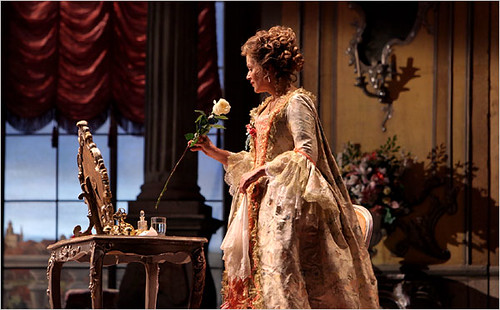
A passagem do tempo - com todas as implicações psicológicas que se lhe associam - constitui um dos eixos que animam a personagem Marschallin, de O Cavaleiro da Rosa, de Richard Staruss.
(Renée Fleming como Marschallin)
Fleming é a protagonista ideal da ópera, ombreando com uma das maiores da história, E. Schwarzkopf.
Aos 50 anos, a extraordinária Renée reinterpreta esta subtíl, rica e complexa personagem da lírica. O Octávio desta produção será o melhor de há muito, também - S. Graham. Juntas, Fleming e Graham maravilharam o mundo nesta mesma ópera.
Dez anos passaram desde a última vez que as intérpretes americanas vestiram a pele das personagens de Der Rosenkavalier. O TEMPO passou e terá deixado marcas indeléveis...
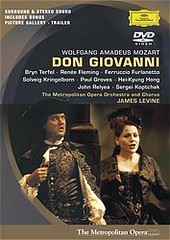
Coming soooooooon ! Para fans da dupla Terfel / Fleming, desta feita em dvd, no Met ! A versão audio - sob a direcção de Solti (DECCA) - já havia comprovado o talento mozartiano de ambos para, respectivamente, Don Giovanni e Donna Anna...