terça-feira, 1 de setembro de 2009

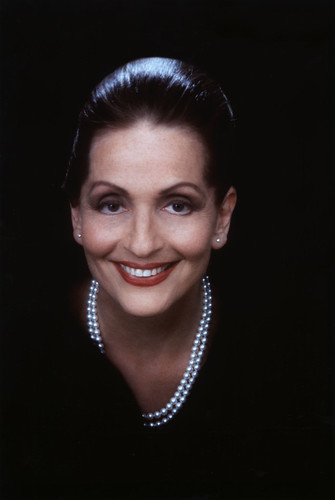
Hildegard Behrens (1937 - 2009) - III


Eis um testemunho insólito...

«Hildegard Behrens is dead – only two years older than I am, and felled by an aneurysm in Japan, far from her Vienna woods. She is the reason I gave up going to performances of the Ring. I don't want anyone else's Brünnhilde to blur my memory of her doing it with the Vienna State Opera in April 1996. In her obituaries over the last fortnight, there has been a great deal said about her intelligence, her insight, her occasionally dodgy vocal quality – all of it true, but somehow missing the mark. She was sublime. What that means is that she was occasionally ridiculous. Her Tosca was ridiculous – on video, that is. You can't – sorry, couldn't – get what Behrens was doing if you weren't seeing her live in an opera house, and sometimes not even then. It was partly a matter of the scale of her performance, which you're not going to get if you're poking a video camera down her throat. You're not going to get it at the Met either, because the Met is just too vast. I don't know what premonition sent me to Vienna that spring, but I am so glad I scraped together enough money for a good hotel and the occasional sachertorte mit schlag. Hildegard Behrens changed forever my understanding of the art of singing opera.

I had always been a stickler for perfect intonation, floating tone slicing its way through the orchestral texture by force of sheer purity, even in the most dramatic of operas. I thought Joan Sutherland had it pretty right, as she shaped ineffable ornaments like a craftsman cutting diamonds, each grace note perfectly in tune. You mightn't have been able to distinguish Sutherland's words in any language, but you never misunderstood the emotional colour of what she sang. She could add plangency that was heartbreaking, without straying from the middle of the note. Behrens was the opposite, a kamikaze pilot of a singer. Hers was an unadorned scream of a voice. As it rocketed through the winding and unwinding, leaping and bounding orchestral motifs, it was electrifying. Sometimes it burned up on re-entry; sometimes it crashed in a succession of hoarse gasps. At times like those, Behrens was ridiculed and even humiliated in the music press. By the time I went to see her perform in Vienna, she was losing her nerve. What was worse, because of the way she used her voice, it had begun to shred.

I found myself in the middle of the third row for all four operas. Donald Runnicles was conducting The Ring at the Vienna State Opera for the first time. When Behrens came on stage as Brünnhilde, I was momentarily aware that she was small and physically unimpressive, and rather too vain about the honey-blonde curls – her own – that bounced over her shoulders. What I wasn't prepared for was the white-hot intensity of her concentration. She struck a pose at the beginning of each musical phrase, and then, keeping her body utterly motionless, launched her voice. There was no fiddling with her spear. No butch posturing. She was so far inside the music that if her costume had fallen off, she would not have reacted.

The opera house surrounded her singing as a frame surrounds a picture; as each motif was completed, it hung in the mind as if it had been drawn in light. Then she changed her position, and the process began again. As phrase built on phrase, I felt as if I had never heard that familiar music before. I learned then that pretty is enjoyable – but sublime exists on another level, beyond comfort, somewhere at the edge of the world.

Behrens had sung Brünnhilde to James Morris's Wotan many times before, notably when she made her debut in the role at the Met in 1990. Runnicles's unsentimental insistence on strict tempo suited her much better than had James Levine's traditional schmalz and schwärmerei. On Runnicles's firm orchestral armature, she erected a performance so shattering that, in act three of Die Walküre, even Morris was moved to a point where his voice turned gruff. From my seat in the third row, I could see him struggling with the lump in his throat.

After the performance, the word went out that Behrens was exhausted and terrified of singing in Götterdämmerung. The friends I was with went back to London, but I hung on, hoping against hope that she would put herself through it again. After a Siegfried in which Brünnhilde was sung by a soprano who is now singing all over the place, but whose fussy performance served to demonstrate how unutterably superior Behrens was, I ran up and down the opera house asking the attendants if they thought Behrens would sing in Götterdämmerung. They said: "This is her opera house. We will take care of her. She will sing." And she did.

There is no chance that I will see a Brünnhilde so utterly destroyed, so uncompromisingly tragic ever again. I would have thought it impossible to show such a depth of devastation and helplessness in music, but Behrens did it. How she did it – whether by her utter absorption, her rapt earnestness or her lack of self-consciousness – I shall never know. Never to have seen her do it would be never to have understood how a preposterous musical drama, with absurdly affected DIY verse for a libretto, could be transmuted into the highest of high art.
»

sábado, 29 de agosto de 2009

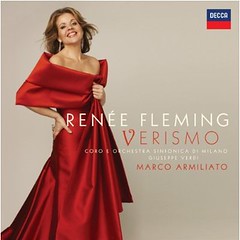
Rentrée II - Verismo, by Fleming


Eis um registo integralmente consagrado ao Verismo italiano, com muito material adicional, além dos habituais "clichés"...

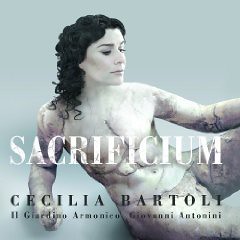
Rentrée I - Sacrificium, by Bartoli


A propósito do lançamento do novo album de Bartoli - Sacrificium -, este Outono, a mezzo italiana revela-se em entrevista ao Le Monde:

«Q'est ce qu'être une diva aujourd'hui ?
C'est toujours un jeu. Faire des interviews, des photos, porter des belles robes... (Rires) Et ne pas y croire totalement. Mais je suis une diva spéciale, qui a envie de partager. Ni solitaire ni mystérieuse. J'aime le contact et ce que les autres m'apportent. Et puis les divas manquent souvent d'humilité envers la musique.

Comment fonctionnez-vous dans la vie ?
J'ai besoin d'adrénaline et de grands projets. Et aussi de symbolique. Voyez par exemple mon prochain disque sur les castrats, Sacrificium. Les contre-ténors ont fait beaucoup pour la redécouverte de ce répertoire, mais je suis la première à aborder aussi le thème de la castration. Peut-être parce que je suis une femme...

Cela change-t-il la façon d'appréhender ce répertoire ?
Musicalement, non, psychologiquement, oui. L'Italie du XVIIIe siècle a mutilé 4 000 enfants par an pendant un siècle. Tout ça pour quatre, cinq ou six grands castrats : c'est un sacrifice au nom de la musique. Le paradoxe de l'Eglise catholique est de s'opposer à la castration tout en interdisant les voix de femmes et en acceptant seulement les castrats dans l'église.

Une femme peut-elle se mettre dans la peau d'un castrat ?
J'avais abordé ce répertoire avec The Salieri Album et surtout Opera proibita, avec des musiques d'Haendel, Alessandro Scarlatti, de Caldara. Mais j'ai attendu d'atteindre une vraie maturité technique et expressive pour faire ce nouveau disque. Caffarelli, Farinelli pouvaient aller de contralto à soprano léger...

Au-delà de la dimension historique et humaine, j'essaie de faire revivre les affects et les effets de la grande tradition baroque, mais aussi des airs pathétiques et des lamentos. Le plus difficile a été d'acquérir avec mon corps de femme la maîtrise du souffle : 25 mesures sans respirer, comme dans le fameux Son qual nave ch'agitata que Riccardo Broschi écrit pour son frère, Farinelli.

Vingt ans de carrière déjà et vous avez su préserver enthousiasme et perfectionnisme...
C'est la passion italienne ! Je ne m'autorise pas l'à-peu-près, et faire des compromis me coûte. Je suis toujours celle qui part la dernière des répétitions et ferme le théâtre avec le gardien. Avec ce sentiment de tristesse qui monte au fur et à mesure qu'on approche de la première. Je pense qu'au-delà du choix de musiques qui conviennent à ma voix, le vrai secret est de chanter des musiques qui conviennent à mon âme.

Etre née dans une famille de chanteurs n'est-il pas parfois un inconvénient ?
Je n'en vois pas. J'ai écouté mes parents chanter quand j'étais enfant et maintenant ce sont eux qui m'écoutent. Ils m'ont élevée au biberon du répertoire romantique italien, Aïda, Traviata, Turandot, La Bohème.... Je leur ai apporté Mozart, Rossini, la musique baroque, qui était peu connus dans l'Italie des années 1970.

La rencontre avec le vieux Karajan a-t-elle influencé la jeune cantatrice que vous étiez ?
Karajan m'avait vue chanter à la télévision pour l'hommage à la Callas diffusé sur Antenne 2, en 1987. Il m'a invitée à auditionner à Salzbourg. Il n'y avait qu'une toute petite lumière sur scène pour le pianiste. C'était impressionnant. Karajan était invisible. Il parlait de la salle avec un micro dans un italien mâtiné d'un fort accent allemand. "Co-sa can-te-ra per me ?" ("Qu'allez-vous chanter pour moi"). J'ai chanté Rossini et Mozart, le "Voi che sapete" du Chérubin des Noces de Figaro.

Après l'audition, il m'a proposé la Messe en si mineur de Bach avec Sumi Jo et Florence Quivar. Toutes les deux-trois semaines, je suis allée travailler à Salzbourg. Cela n'a duré que les trois mois précédant sa mort. Mais quel souvenir !

Y a-t-il des rôles qui transforment une vie ?
La vie, la scène, tout est en correspondance. Il y a dans la vie de petits moments de joie, et beaucoup de tristesses. Mais ma philosophie est tout entière dans le très bel air du Il trionfo del tempo e del disinganno, de Haendel : "Lascia la spina, cogli la rosa" ("Laisse l'épine, cueille la rose"). Il y a des rôles qui vous aident à vous comprendre et à comprendre les autres. Cosi fan tutte, par exemple, surtout quand on a, comme moi, chanté, grâce à Nikolaus Harnoncourt, les trois rôles féminins.

Parmi les rôles impossibles, il y a celui de Don Giovanni, que vous rêveriez d'interpréter ?
C'est un personnage idéalement jouissif. La séduction, le pouvoir, la quête permanente. Le rôle féminin qui s'en rapproche le plus est sans doute Carmen, et il n'est pas impossible que je le mette un jour à mon répertoire. Il a un côté tellement noir, presque suicidaire.

Les rôles dramatiques vous font-ils peur ?
J'arrive mieux à les maîtriser. Mais je suis sensible au temps qui passe, même si cela permet de se réconcilier avec les gens qui ne sont plus. Ce qui me sauve est mon côté romain, volontaire, persévérant, même s'il y a des jours avec des épines partout et pas de rose.

Je sors, je marche, j'essaie de me laisser surprendre par le fleuve. Je regarde la nature. Nous autres, musiciens, souffrons d'être toujours à l'intérieur. Les salles, les répétitions, les avions, les trains. Cela fait un peu prison.

Pensez-vous parfois à la fin de votre voix ?
J'y pense et je n'y pense pas. Quand je me lève le matin, je ne me pose jamais la question car je deviendrais dingue. Mais je suis très lucide car j'ai vu ma mère très bien chanter jusqu'à l'âge de 55 ans, avant le changement hormonal. Cela viendra un jour, je le sais. Je ne suis pas prête à faire des traitements spéciaux ou à prendre des hormones. Je ne serai pas un castrat à l'envers !

Vous acceptez donc le cours naturel des choses ?
Je ne comprends pas la folie de la chirurgie esthétique, avec toutes ces femmes complètement mutilées. Les mannequins anorexiques ! Je ne prends pas de médicaments et je ne ferai pas de lifting dans cinq ans. Je n'accepte pas les diktats de la mode. Je veux que ma vie privée soit vraiment privée.

La seule chose que vous avez laissé filtrer est ce regret de n'avoir pas encore eu d'enfant.
Ce n'est pas un choix et je ne fais pas partie de ces artistes qui ont décidé de ne pas avoir d'enfant. Je pensais que c'était facile. Il y a des femmes qui tombent enceintes sans y penser. J'ai essayé, on verra.

La seconde est la mort de votre frère Gabriele. Vous lui avez dédié un disque...
Cela est arrivé si vite. Je n'ai rien compris. C'est difficile de dire ces choses-là. Je suis romaine, chrétienne - mais catholique, hum !, il s'agit presque d'une force politique ! - et je crois qu'il y a autre chose, une autre vie.

Vous avez des mots durs pour la situation en Italie aujourd'hui...
C'est un pays sinistré, qui est en train de perdre tous ses artistes. Les milliers de politiciens qui y pullulent ont tout détruit. Mais quand tous les théâtres lyriques seront ruinés ou fermés, il restera toujours Berlusconi ! Il chante et a toujours son guitariste avec lui. C'est terrible, mais je ne me sens aucun devoir envers l'Italie. Ce pays ne m'a pas soutenue et j'ai été obligée de partir pour bâtir une carrière.

C'est pour cela que vous avez choisi de vivre à Zurich ?
Je n'ai pas choisi la Suisse, c'est elle qui m'a choisie. J'ai commencé à chanter à l'Opéra de Zurich en 1988-1989 et j'ai toujours été réinvitée depuis. C'est un pays qui a une certaine ouverture d'esprit, ne serait-ce que parce qu'on y parle quatre langues : le français, l'italien, l'allemand et le romanche.

Avez-vous de nouveaux projets à Paris en dehors de votre récital annuel ?
J'aimerais bien revenir sur scène à l'opéra. Au Théâtre des Champs-Elysées, à Pleyel, mais aussi à l'Opéra-Comique, qui est un endroit que j'aime beaucoup. J'y ai vu une représentation de Zampa, d'Hérold, dirigé par William Christie. Des opéras en français, pourquoi pas ? Je pensais à La Clary, d'Halévy, que j'ai fait à Zurich et qui avait été créé à Paris. Mais cela n'a pas marché.

Que souhaitez-vous dans les dix ans qui viennent ?
Continuer à apprendre. Parler d'autres langues, voir d'autres villes, d'autres pays. Je voyage en train car je n'aime pas l'avion, mais aussi parce que cela me donne la possibilité de regarder. Mais, à 43 ans, je ne connais rien. J'ai de plus en plus un sentiment d'urgence. Déjà quand j'étais petite, je ne pouvais rester sans bouger sur la plage plus de dix minutes.

Et dans la vie ?
L'homme de ma vie chante en ce moment dans Cosi fan tutte à Zurich. Il possède la patience et l'humour nécessaires pour vivre à mes côtés. J'ai fini une tournée et je suis en ce moment à la maison pour un rôle de "mamma diva", mais j'aime ça aussi !»

Os mais curiosos poderão deitar uma espreitadela à track list:

1. Come nave in mezzo all'onde* [Siface] - Acto II de Siface
2. Profezie, di me diceste* [Sedecia] - Sedecia
3. Cadrò, ma qual si mira* [Demetrio] - Berenice
4. Parto, ti lascio, o cara* [Arminio] - Acto II de Germanico in Germania
5. Usignolo sventurato* [Siface] - Acto II de Siface
6. Misero pargoletto* [Timante] - Acto III de Demofoonte
7. In braccio a mille furie* [Mirteo] - Acto III de Semiramide riconosciuta
8. Qual farfalla* [Decio] - Acto II de Zenobia in Palmira
9. Nobil onda [Adelaide] - Adelaide
10. Deh, tu bel Dio d'amore ... Ov`è il mio bene?* [Farnaspe] - Acto II de Adriano in Siria
11. Chi temea Giove regnante* [Berenice] - Farnac
12. Quel buon pastor son io [Abel] - Acto I de La Morte d'Abel

Em extra - edição de luxo -, integrando um segundo disco, haverá mais três excertos:

1. Son qual nave [Arbace] - Acto III de Artaserse (Pasticcio)
2. Ombra mai fu [Serse] - Acto I de Serse
3. Sposa, non mi conosci [Epitide] - Acto III de Merope

Por agora, é esperar, pacientemente...

sexta-feira, 28 de agosto de 2009

Goerne ossia O Magnânimo


Eis uma magistral caracterização da prestação de um génio:
«Matthias Goerne está pasando por sus mejores años y la interpretación fue soberbia, sublime. La primera nota de la primera canción, Nacht und Träume, una nota algo alta, larguísima, atacada suavemente, casi sin vibrato, con un poco, sólo lo necesario, de messa di voce y un timbre redondo inefablemente aterciopelado fue toda una declaración del magnífico estado actual de Goerne y de su espléndida madurez como intérprete.

En el intermedio no pocos aficionados comentaban con asombro esa primera e increíble nota que había obrado el milagro de meternos a todos de golpe en el concierto, de lograr un estado de concentración altísimo y una comunicación inmediata intérprete-público como muy pocas veces se logra. Goerne verdaderamente alcanzó el cielo y sólo le hizo falta una única primera nota.».

Citado o essencial da notícia, eis o acessório da mesma:

«Matthias Goerne actuó una vez más en la Schubertíada de Vilabertran (Alt Empordà). Empezó a cantar allí en 1993, cuando sólo era un joven que despuntaba; hoy, convertido en el más destacado intérprete de lied que circula por los escenarios, sigue fiel a su cita anual en Vilabertran con un público silencioso y ejemplar (ni un móvil, ni un aplauso a destiempo) que le adora.

Goerne, que se propuso hace unos tres años presentar de manera sistemática en disco y en recital la totalidad de los lieder de Franz Schubert, abordó en Vilabertran el cuarto recital de esta empresa titánica que le ocupará toda la vida, pues Schubert compuso más de 600 lieder.

La música es la forma de expresión artística que mejor y con más profundidad logra el consuelo y el alivio de la aflicción del espíritu, es el arte más consolador que existe aunque, como lo mismo que te cura, te mata, puede también provocar, llegado el caso, mucho más desconsuelo que la literatura y la pintura juntas.

Schubert fue maestro en el arte del consuelo y el desconsuelo musical y Goerne, que además de cantar ha aprendido a confeccionar programas, ofreció una selección de una veintena de canciones en las que la emoción dominante, aunque no la única, era el consuelo, ya fuera consuelo blanco como en Die Sterne (Las estrellas), o consuelo negro, como en Totengräbers Heimweh (Nostalgia del enterrador), donde se presenta el tema de la añoranza de la tumba como liberación, pasando por todos los matices del consuelo gris en canciones como Der blinde Knabe (El chico ciego), Todtengräber-Weise (Canción del enterrador) y Greisengesang (Canto de la vejez).

Consolados y desconsolados, ingenuos y felices en Erntlied (Canción de la cosecha) y Herbstlied (Canción de otoño), bobamente enamorados en An Sylvia (A Silvia) o convertidos en exploradores de los sentimientos de la noche en Nacht und Traüme (Noche y sueños), An den Mond (A la luna), Die Mainacht (La noche de mayo) y Die Sommernacht (La noche de verano), de la mano de Goerne y Alexander Schmalcz, su magnífico pianista acompañante, viajamos por bellísimas páginas schubertianas, algunas de ellas desconocidísimas incluso por el público experto de la Schubertíada y que constituyeron preciosos descubrimientos.»

segunda-feira, 24 de agosto de 2009

Hoje não há nada!

É dia de folga para os artistas! Voltem amanhã, se assim entenderem. E com dinheirinho na mão - que isto de comprar entradas para o met, sem antes fazer contas...

domingo, 23 de agosto de 2009

Glyndebourne: (outra) Rusalka


Em Glyndebourne, Ana Maria Martinez assume-se como a futura protagonista - embora alternativa - de Rusalka. Fleming apoderou-se desta criatura da ópera, reinando sem concorrência ao longo de quase 20 anos. Doravante...


(Ana Maria Martinez)

«On s'est habitué, avec Renée Fleming, qui a souvent chanté le rôle-titre (et l'a enregistré pour Decca), à une Rusalka crémeuse et alanguie, mais Ana Maria Martinez est tout autre : merveilleuse de chant et de ligne, elle incarne une femme moins mélancolique que révoltée contre sa condition d'ondine et prête à tout pour devenir l'épouse du beau prince qu'elle convoite.

Le Prince est incarné par un ténor stupéfiant, Brandon Jovanovich : ce physique de star de cinéma (pour une fois, le "Prince charmant" ressemble à un prince charmant !) a surtout pour lui une voix d'une richesse stupéfiante, presque barytonnante dans le médium et capable, dans l'aigu, de sons en voix mixte d'une grande douceur. Il a chanté à l'Opéra de Nantes, mais on l'attend désormais sur une grande scène parisienne. La sorcière Jezibaba de Larissa Diadkova casse la baraque, comme chaque fois que cette mezzo russe se produit (on l'a entendue chanter le rôle à l'Opéra de Paris en 2002). Tout le reste de la distribution est parfait, exemplaire.

Queues de sirènes

On s'étonne pourtant qu'un festival d'un niveau aussi élevé puisse se rabaisser à présenter une production aussi mauvaise (signée Melly Still), aussi littérale dans son traitement dramaturgique du livret, aussi laide de décors, de costumes et de lumières. Les queues des sirènes (qui descendent des cintres) ressemblent à des cocons détumescents en mélange de laine plucheuse et de pilou, les figurants mimes et danseurs sont d'un ridicule achevé, l'appendice, lui aussi plucheux, de l'ondin Vodnik (cousin dégénéré, adipeux et naturiste de Shrek), assez terrifiant. Du coup, l'on a fini par trouver ce conte, ainsi traité, parfaitement ridicule, alors qu'il n'est que grâce et poésie.

Lorsqu'on fait le métier de critique à l'opéra, on n'a pas le droit de fermer les yeux, mais, à Glyndebourne, ce n'est pas l'envie qui nous en a manqué...»

sábado, 22 de agosto de 2009

Em degustação...

MY OWN MET OPERA HOUSE - 2010 ;-)))

Item

Qty

Section

Seats

Performance Ticket

Tosca

Tuesday, April 20, 2010

8:00 PM

2

Dress Circle

Section:DR CIRC

Row:D

Seats:16,18 **

View seating chart

Performance Ticket

Armida

Thursday, April 22, 2010

8:00 PM

2

Family Circle Front

Section:FAM CIRC

Row:C

Seats:230,232 **

View seating chart

Performance Ticket

La Traviata

Wednesday, April 21, 2010

8:00 PM

2

Family Circle

Section:FAM CIRC

Row:A

Seats:6,8 **

View seating chart

Performance Ticket

Der Fliegende Holländer

Friday, April 23, 2010

8:00 PM

2

Family Circle

Section:FAM CIRC

Row:G

Seats:218,220 **

View seating chart

Salzburgo? Bayreuth?!

Com ou sem perplexidade (mas, indubitavelmente, com toda a razão), a Teresa aponta a minha ausência de referências a Salzburgo'09. Isto, a propósito do Così de Guth.


(Claus Guth)

A verdade, caríssima, é que a imprensa especializada - vá lá saber-se por quê (crise, desinteresse?) - poucas ou nenhumas referências tem feito, tanto a Salzburgo, como a Bayreuth!

Com muita pena minha - diga-se -, posto que este ano não tive a felicidade de me deslocar a nenhuma das catedrais...

Não se pode ter tudo! Temos o São Carlos, com a sua excelsa direcção artística, pois então!

Há pessoas eternamente descontentes com o que têm...

sexta-feira, 21 de agosto de 2009

Hildegard Behrens (1937 - 2009) - II


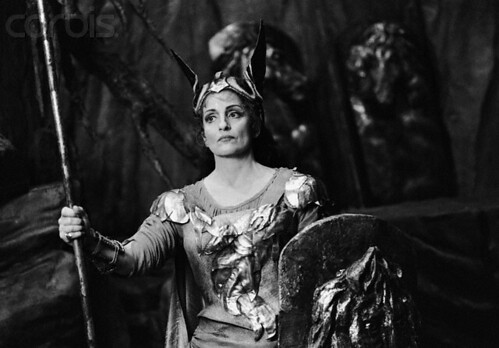
(Behrens como Brünnhilde)

Falemos claro, no tocante a Behrens, recentemente falecida: não era um soprano mítico, sendo um grande e destacado soprano dramático.

Pela parte que me toca – à excepção de Salome (o seu maior triunfo) -, Behrens foi uma notável wagneriana, sobretudo, rivalizando com a belíssima G. Jones. Brilhou como Senta, Isolda e Brünnhilde (ei-la na produção grandiosa e datada de Schenk). Compôs, ainda, uma destacada Leonora (Fidelio) e uma assinalável Mulher do Tintureiro (A Mulher Sem Sombra). Na fase decadente da carreira, foi uma das mais proeminentes Elektra – também é verdade que poucas eram as concorrentes…

Eis uma síntese da revista de imprensa sobre o desaparecimento desta reputadíssima intérprete, quiçá a mais humana de todas as intérpretes wagnerianas (pela fragilidade e doçura das suas incarnações):

«La soprano allemande Hildegard Behrens, célèbre pour ses interprétations d'héroïnes wagnériennes, est morte au Japon, mardi 18 août, à l'âge de 72 ans. Admise dimanche dans un hôpital de Tokyo à la suite d'un malaise, Mme Behrens est décédée d'une rupture d'anévrisme, a expliqué un responsable du secrétariat du festival international d'été de musique de Kusatsu, où la chanteuse devait se produire jeudi.

Hildegard Behrens fait ses débuts en 1971 à Freibourg, dans le rôle de la Comtesse des Noces de Figaro, de Mozart. Cinq ans plus tard elle se trouve sur la scène du Metropolitan Opera de New York, interprétant Giorgetta dans Il Tabarro, de Puccini – elle se produira 171 fois sur cette scène prestigieuse, la dernière fois en 1999. Mais c'est au festival de Salzbourg, dans le rôle-titre de Salome, de Richard Strauss, qu'elle conquiert son public.

Dans les années 80, ses interprétations de Wagner, et notamment du rôle de Brünnhilde dans la Tétralogie, assurent sa notoriété. Soprano dramatique, ses grands rôles incluent également Elettra dans Idomeneo et Donna Anna dans Don Giovanni, de Mozart, Fidelio dans l'opéra homonyme de Beethoven, Isolde dans Tristan und Isolde et Senta dans Le Vaisseau fantôme, de Wagner, Santuzza dans Cavalleria Rusticana, de Mascagni, les rôlLinkes-titres dans Elektra et Salome de Richard Strauss et Marie dans Wozzeck de Berg.»

«Soprano Hildegard Behrens, one of the finest Wagnerian performers of her generation, has died while traveling in Japan. She was 72.

Jonathan Friend, artistic administrator of the Metropolitan Opera in New York, said Tuesday in an e-mail to opera officials that Behrens felt unwell while traveling to a festival near Tokyo. She went to a Tokyo hospital, where she died of an apparent aneurism.

Friend's e-mail was shared with The Associated Press by Jack Mastroianni, director of IMG Artists.

Her funeral was planned in Vienna.

Organizers for Behrens' visit in Japan said she was in this country to teach lessons in the hot springs resort town of Kusatsu, north of Tokyo, from Aug. 21-29. The lessons were being sponsored by the Kanshinetsu Music Association.

The organizers declined to comment further.

A Web site for the Kusatsu Summer Music Festival said Behrens' performances had been canceled, but gave no further details. It said she was to perform on Aug. 20.

According to Behren's official Web site, she was born in the north German town of Varel-Oldenburg. Her parents were both doctors and she and her five siblings studied piano and violin as children.

It said she earned a law degree from the University of Freiburg, where she also was a member of the student choir.

She was named singer of the year in 1997 by the German opera magazine Die Opernwelt and singer of the year for 1996 by the German opera magazine Orpheus.»

«The German soprano Hildegard Behrens, a mesmerizing interpreter of touchstone dramatic soprano roles like Wagner’s Brünnhilde and Strauss’s Salome during the 1980s and early ’90s, died on Tuesday in Tokyo. She was 72 and lived in Vienna.

Her death was announced by Jonathan Friend, the artistic administrator of the Metropolitan Opera, in an e-mail message sent to associates and released to the media by Jack Mastroianni, director of the vocal division at IMG Artists and her former manager.

Ms. Behrens fell ill while traveling to a festival in Kusatsu, a Japanese resort town, to present master classes and a recital, and was taken to a hospital in Tokyo on Sunday night. She died there apparently of an aneurysm, Mr. Friend wrote.

Ms. Behrens’s ascent into the demanding Wagnerian soprano repertory was uncommonly fast after starting her career late. She did not begin vocal studies, at the Freiburg Academy of Music, until she was 26, the same year she graduated from the University of Freiburg in Germany as a junior barrister, having initially chosen law as a profession.

Her debut came in Freiburg in February 1971, the month she turned 34, in a lyric soprano role, the Countess in Mozart’s “Nozze di Figaro.” Her voice at the time was rich and flexible, and she might have continued on a lighter repertory path. But the shimmering allure and power of her sound and the intensity of her singing led her inexorably to Wagner.

In her prime she was a complete vocal artist, a singer whose warm, textured voice could send phrases soaring. Her top notes could slice through any Wagner orchestra.

Her technique made heavy use of chest voice, an approach that would eventually take a toll on her singing. Many purists argued that Ms. Behrens was no born Wagnerian. Her voice lacked the penetrating solidity of a Kirsten Flagstad or the clarion brilliance of a Birgit Nilsson.

Yet with her deep intelligence, dramatic fervor and acute emotional insights, she made her voice do what the music and the moment demanded. A beautiful woman with dark hair and a slender athletic frame, she was a poignant actress capable of fits and temperamental flashes onstage.

She was riveting as Wagner’s Isolde, a role she recorded with Leonard Bernstein conducting; Senta from “Der Fliegende Holländer”; and, especially, Brünnhilde.

She learned the three Brünnhilde roles of Wagner’s “Ring” cycle (in “Die Walküre,” “Siegfried” and “Götterdämmerung”) simultaneously, because she thought of the cycle’s four operas as an entity, an organic operatic drama. Her first Brünnhilde came with a complete “Ring” at the Bayreuth Festival in Germany in 1983, the production conducted by Georg Solti. It was a triumph for Ms. Behrens, which she repeated for the next three summer seasons there.

She sang the role when the Met opened its 1986-87 season with “Die Walküre,” the first installment of Otto Schenk’s production. In the spring of 1989 she sang in the Met’s first presentation of the complete Schenk “Ring,” which was designed with her in mind. The production was retired this May.

Between her Met debut as Giorgetta in Puccini’s “Tabarro” in 1976 and her appearances as Marie in Berg’s “Wozzeck” in 1999, she sang 171 performances with the company, including Leonore in Beethoven’s “Fidelio,” Elettra in Mozart’s “Idomeneo” and the title roles in Strauss’s “Salome” and “Elektra.” She sang the title role in Puccini’s “Tosca” opposite Plácido Domingo in the premiere of the popular Franco Zeffirelli staging introduced in 1985, a production later broadcast on public television.

Still, Brünnhilde became her Met calling card. She appears in the company’s DVDs of the Schenk “Ring” — recorded mostly in 1990, when she was at her dramatic and vocal peak — with James Levine conducting. The release affectingly captures her uncommonly feminine and thoughtful portrayal of this rambunctious character.

Yet Ms. Behrens’s move into Wagner was an act of will that took a vocal toll. By the mid-1990s, when she was approaching 60, her singing became ragged, with dicey pitch and strident top notes. Ms. Behrens drew criticism from many opera buffs and reviewers during this period. But she was determined to sing her chosen roles with uncompromising intensity, whatever the cost.

Hildegard Behrens was born on Feb. 9, 1937, in Varel, Germany, west of Hamburg, the youngest of six children. Both her parents were doctors, and her father was an avid amateur musician. As a child Ms. Behrens studied piano and violin and had a natural singing voice. Commenting on her musical upbringing in a 1983 interview with The New York Times, she said, “Nobody cared for me, and I had no expectations.” Hence her drift into law school.

Her true talent did not emerge until well into her vocal studies in Freiburg. In 1972 she joined the Deutsche Oper in Düsseldorf. She was discovered there by the powerful conductor Herbert von Karajan, who recruited her to sing Salome at the Salzburg Festival in Austria in 1977. The experience was exasperating for the determined Ms. Behrens: Karajan insisted that a nonsinger perform Salome’s Dance of the Seven Veils. Still, her performance was acclaimed and led to a landmark recording.

In the 1983 interview Ms. Behrens explained that she knew from the beginning that she would become a dramatic soprano, and that her slow start was an advantage.

“I consider my career to have had a fantastic logic,” she said, adding, “Now I realize that all that time I spent at the conservatory allowed me to evolve as a musician.”

“It was like playing a role out in my mind, before I actually did it. Even today I can think through a part, and my throat will subconsciously assume all the correct positions without my actually having to sing.”

By the early 1980s Ms. Behrens was such a major Met artist that she considered her loft in Chelsea home; she lived there at the time with her two children. Ms Behrens’s children, Philip Behrens of Munich and Sara Behrens Schneidman of Vienna, survive her, along with two grandchildren. She was married for a time to the German director Seth Schneidman, who directed her in several productions.

Ms. Behrens saw no divide between acting and singing. “Music for me comes out of the dramatic context,” she said in a 1997 interview with Opera News. “I have never had the temptation to view the voice as a fetish. For me it’s just a vehicle. I cannot consider it as some kind of golden calf.”

In 1990, while performing in the “Ring” at the Met, Ms. Behrens sustained a severe injury when a piece of scenery fell on her during the final scene of “Götterdämmerung,” the dramatic climax in which the Hall of the Gibichungs collapses. A beam of plastic foam and canvas stretched over wood fell prematurely and knocked Ms. Behrens to the floor, bruising her forehead and blackening her eyes. She had to miss subsequent performances. In a statement at the time, she said that if the beam had not struck her she might have taken a fatal fall into an open shaft created by a premature lowering of part of the stage floor.

Ms. Behrens was not an artist who looked back at decisions with regret, including her early choice of law school. She found helpful connections between law and opera.

“You go step by step in law,” she said in the Opera News interview, “and that’s what you do in opera too — finding motivations, reasons, cause and effect, emotions, guilt, responsibility. The intellectual training and discipline that it takes to solve a juridical case are very good for the approaches to a role.”»

quinta-feira, 20 de agosto de 2009

Hildegard Behrens (1937 - 2009)


Oportunamente, volverei ao tema.

Para mim, entrou para a história quando, em Salzburgo, sob a orientação do Mestre, interpretou uma das mais extraordinárias Salome.

segunda-feira, 17 de agosto de 2009

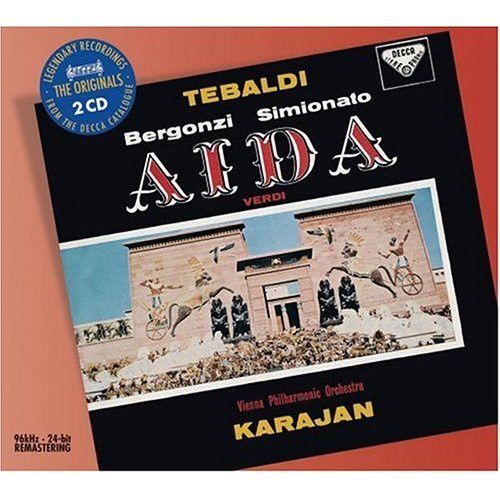
Aida, ossia a Imperatriz

Há anos que procuro a Aïda da minha vida.

É certo que, no tocante a intérpretes da mesma ópera, encontro-me sobejamente satisfeito: L. Price e Caballé são a protagonista, Vickers, Bergonzi e Domingo incarnam o Radamés ideal e Cossoto (seguida, com assinalável distância, de Gorr e Simionato) materializa a Amnéris absoluta.

Continua a faltar-me a leitura definitiva, que alie vozes e interpretações de sonho a uma orquestra e coro divinamente dirigidos. É que a perfeição – caro e fiel leitor -, em ópera (de estúdio) pode muito bem existir (vide Don Giovanni, Tristan, Tosca, Parsifal e Le Nozze di Fígaro, apenas para citar as mais visíveis)!


A presente interpretação roça a perfeição, maioritariamente graças a Von Karajan & Filarmónica de Viena.

O maestro austríaco e a divina filarmónica desenham a melhor Aïda orquestral que alguma vez conheci: majestosa, dramática, de uma grandiosidade heróica, alternando com notável plasticidade os momentos de lirismo recatado – as árias da protagonista, nomeadamente, o dueto do último acto – com as cenas grandiosas – a marcha triunfal, por exemplo. A todo o instante, sente-se o controlo inabalável de Von Karajan, que dirige com mão de ferro, envolta em veludo.
Definitivamente, em matéria de direcção orquestral, a democracia é sinónimo de blasfémia!

Em relação aos solistas, Simionato é a que mais se evidencia, compondo uma Amnéris impressionante. Corroída pelo ciúme, move-se entre a sede de vingança e o desespero derradeiro, apoiando-se numa voz imponente. Bergonzi – que é um dos melhores Radamés de sempre – peca pela melancolia, que o invade, e Tebaldi, apesar da excelsa qualidade do spinto, banha a sua composição num oceano angelical, parco em libido. Aïda é uma fêmea, e quanto a isso não pode haver hesitações!


Bordejando a perfeição – por Von Karajan, acima de todos -, esta é uma das mais grandiosas Aïda.


________
* * * * *

(4.5/5)
domingo, 16 de agosto de 2009

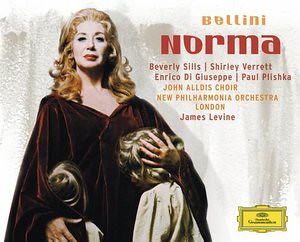
Sills's Norma


Por artes do demo, consegui esta Norma antes da sua comercialização.

Ainda se Sills a tivesse gravado 10 anos antes...

A sua Norma é profundamente humana e sensível, mas - convenhamos - deve ser cantada de acordo com os quesitos belcantista (agilidade, bravura, etc.). Em lugar da dita disciplina belcantista, temos uma técnica frágil e um vibrato dificilmente tolerável.

A vulnerabilidade (humana) tem limites, quando se trata de Norma, figura que se encontra à mi chemin entre os Deuses e os vis terrenos.

Por ora, pouco mais há a acrescentar.

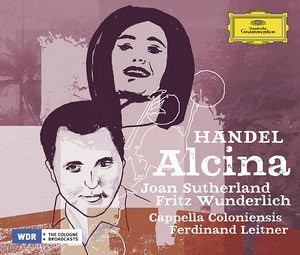
Alcina...


Mantenho as minhas reservas, relativamente a esta Alcina - pelos cortes e dúvidas quanto aos dotes expressivos de Sutherland, como protagonista.

Contudo, eis a impressão de certa imprensa britânica (inevitavelmente tendenciosa, quando se trata de Dame Joan Sutherland...):

«Starring Joan Sutherland as Alcina and Fritz Wunderlich as Ruggiero, it has long been popular on the bootleg circuit, though purists have also often pointed out its idiosyncrasies: half an hour's music is cut; Morgana's showpiece Tornami a Vaggheggiar is reallocated to Alcina so Sutherland can sing it; Ruggiero's role, written for an alto castrato, is transposed for Wunderlich, the finest of postwar German tenors. Yet its reputation as one of the greatest Handel performances is entirely justified. Sutherland, sounding galactic and supernatural, stops you in your tracks with every utterance, while Wunderlich rages, swoons and finally abandons passion for reason in ways that break your heart. The remastering is tremendous, too.»

Em degustação...

sábado, 15 de agosto de 2009

Triunfo


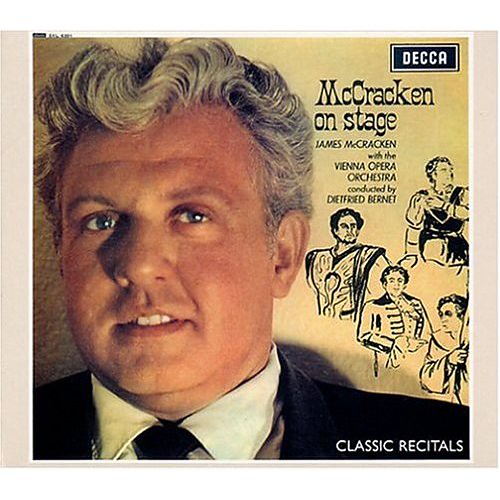
McCracken move-se entre o spinto, dramático e o heldentenor. Ladeia Vickers e King.

Com um timbre cheio, baritonal, transpira robustez.

As suas interpretações assentam no elevado sentido dramático, heróico e másculo.

O resultado é um Manrico hercúleo, um Don Alvaro tremendo, um Walter irresistível e um extraordinário Otello.

Indispensável.


_______
* * * * *
(5/5)

quinta-feira, 13 de agosto de 2009

Melhor a emenda que o soneto...


Gheorghiu cancela a sua Carmen (da ópera homónima) - prevista para Dezembro, no Met -, sendo substituída por Garanca.


Mentiria se dissesse que lamento o sucedido...


«(...) Ms. Gheorghiu simply expresses “deep regret” for having to withdraw from this production, which has been highly anticipated partly for the infrequent opportunity to hear a noted soprano sing a touchstone mezzo-soprano role. The mezzo-soprano Elina Garanca, who sang the title role in Rossini’s “Cenerentola” at the Met last season to acclaim, will sing Carmen in place of Ms. Gheorghiu, who will still sing the final two performances for which she was scheduled, on April 28 and May 1. On those dates her Don José will be the tenor Jonas Kaufmann.»


« A spokesman for the Romanian soprano says she is unable to perform the six shows at the Metropolitan Opera in New York for "personal reasons". The production, which is due to open on New Year's Eve, is to be staged by Sir Richard Eyre around Gheorghiu, 43, and her husband, the French tenor Roberto Alagna, 46.

She has rarely played the role of the fiery Spanish gipsy in Georges Bizet's opera, which was written for mezzo-sopranos. The Met's production is due to be broadcast in theatres around the world. The couple have been banned twice by the opera house after their contretemps over previous productions.»